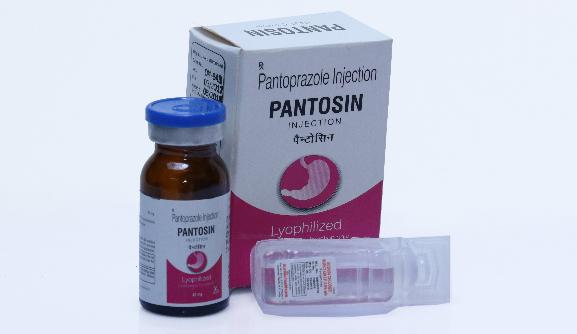
Pantoprazole 40mg
Pantoprazole, first sold under the brand name Protonix, is used for short-term treatment of erosive esophagitis associated with gastroesophageal reflux disease (GERD), maintenance of healing of erosive esophagitis, and pathological hypersecretory conditions including Zollinger–Ellison syndrome.
Pantoprazole 40mg injection is used in the treatment of acidity, heartburn, intestinal ulcers and stomach ulcers.
How to use PANPRAZOLE INJECTION
Your doctor or nurse will give you this medicine. Kindly do not self administer.
How it works:
Panprazole 40mg injection lowers the acid production in the stomach.
Nausea, Headache, Abdominal pain, Constipation, Diarrhoea, Flatulence.
Adverse effects:
• Infection: Stomach acid plays a role in killing ingested bacteria. Use of pantoprazole may increase the chance of developing infections such as pneumonia, particularly in hospitalized patients.
Some Common Effects:
• Gastrointestinal: abdominal pain (6%), diarrhea (9%), flatulence (4%), nausea (7%), vomiting (4%)
• Neurologic: headache (12%), dizziness (3%)
• Neuromuscular and skeletal: arthralgia (3%)
Take pantoprazole exactly as prescribed by your doctor. Follow the directions on your prescription label carefully.
• For short-term treatment of erosive esophagitis linked with GERD, the adult dose is 40 mg once daily for up to 8 weeks.
• For maintenance of healing of erosive esophagitis, the adult 40 mg once daily.
• For hypersecretory conditions such as Zollinger-Ellison Syndrome, the adult dose is 40 mg twice daily.
Pantoprazole Overdose
If you take too much pantoprazole sodium, call your doctor right away.
• Inform your doctor if you do not feel better after taking it for 14 days as you may be suffering from some other problem that needs attention.
• Pantoprazole can decrease magnesium levels in blood. Get your magnesium levels checked regularly. You may need a magnesium supplement or need to discontinue your medicine.
• Inform your doctor if you are suffering from osteoporosis as Pantoprazole can weaken your bones by decreasing calcium levels in blood. You may need a calcium supplement, preferably calcium citrate.
• Pantoprazole is a well-tolerated medicine and provides relief for a long time.
• It may take a few days to show its effect. You can take an antacid for a quick relief during this time unless your doctor has asked you not to use them.
• Once you start feeling better, do not stop taking your medicine. Take it for the duration as advised by your doctor.
Tell your doctor about all of the medicines you take, including prescription and non-prescription drugs, vitamins and herbal supplements. Pantoprazole may affect how other medicines work, and other medicines may affect how pantoprazole works. Especially tell your doctor if you take:
• Warfarin (Coumadin, Athrombin-K, Jantoven, Panwarfin)
• Ketoconazole (Nizoral)
• Atazanavir (Reyataz), Nelfinavir (Viracept)
• Iron supplements
• Ampicillin antibiotics
Ask your doctor if you are not sure if any of your medicines are the kind listed above.
Do not take pantoprazole if you are:
• allergic to any of the ingredients in pantoprazole delayed-release tablets.
• allergic to any proton pump inhibitor (PPI). If you do not know if your medicines are PPIs, please ask your doctor.
• Store pantoprazole at room temperature between 59° to 86°F (15° to 30°C).
• Keep pantoprazole and all medicines out of the reach of children.